Fendi’s Sexy New Vision for Spring 2027

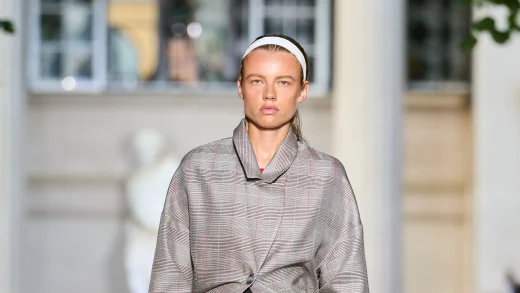
Maria Grazia Chiuri has spent much of her career examining femininity through fashion. From her work at Dior to her new role at Fendi, the Italian designer has consistently explored the relationship between women, clothing and the body. For Spring/Summer 2027, she pushed that conversation into more sensual territory, creating a collection centered on intimacy, movement, confidence and the freedom to reveal—or conceal—the body.
At the heart of the collection was Raffaella Carrà, the legendary Italian singer, dancer and television personality whose glamorous, energetic image made her one of the country’s most recognizable cultural figures.
Carrà’s influence gave the collection a distinctly Italian flavor. Chiuri looked to the performer’s famous television appearances and stage performances, particularly her celebrated collaboration with Adriano Celentano on Milleluci. Their choreography and physical interaction captured something Chiuri wanted to explore: the idea of bodies moving together and existing in constant relationship with the people and world around them.
That sense of movement became visible across the Fendi runway.
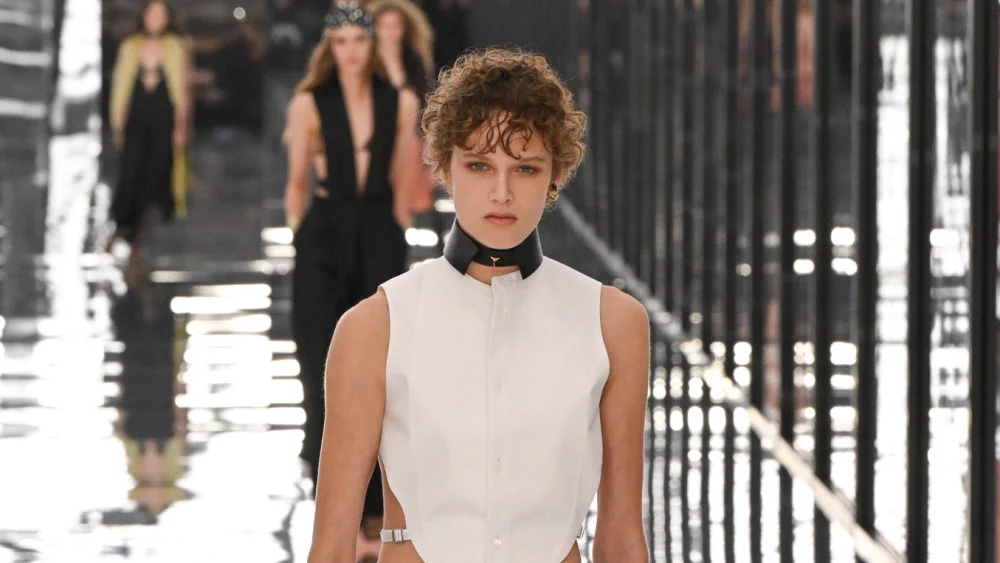
Carrà was known for embracing clothes that emphasized the figure, including fitted catsuits, mesh tops, flared trousers and sparkling bralettes. Chiuri revisited those familiar codes while giving them a contemporary Fendi treatment.
One of the collection’s standout pieces was a modern interpretation of Carrà’s iconic catsuit. The sleek black jersey design featured long sleeves, shoulder cutouts and silver grommet details, transforming a classic 1970s silhouette into something sharper and more modern.
The decade’s glamorous nightlife also appeared in a series of shimmering maxi dresses. Covered in embellishment and designed to catch the light, the looks recalled the exuberance of the disco era and the kind of high-energy glamour associated with legendary nightlife destinations such as Studio 54.
But while the collection clearly embraced its retro references, it was not simply an exercise in nostalgia.
The real focus was the body.
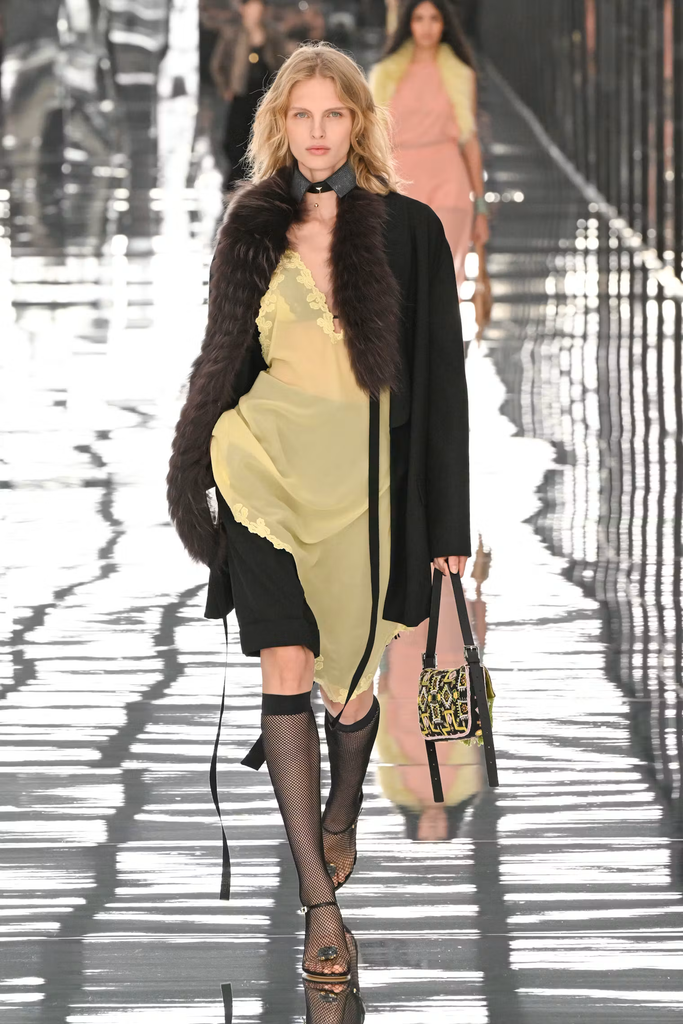
Lingerie became one of Chiuri’s most important design tools for the season. Instead of treating underwear as something hidden beneath clothing, she brought it directly into view. Satin shorts with delicate lace trims were paired with matching triangle bras, creating coordinated looks in soft teal, peach and classic black.
The styling made the lingerie feel intentional rather than accidental. Bras became part of the silhouette, while lace and satin were treated as materials worthy of being seen rather than concealed.
That idea continued throughout the collection.
Sheer chiffon dresses allowed the body and the layers beneath them to remain visible. Plunging necklines exposed flashes of skin and lace, while fringed tunics offered glimpses of lingerie. Other looks featured thigh-high playsuits with strategically positioned side cutouts that emphasized the natural curves of the wearer.
The effect was undeniably sensual, but Chiuri’s intention went deeper than simply creating provocative fashion.
The designer has explained that the collection began with conversations about undergarments and the body. Those conversations gradually expanded into broader questions about femininity, intimacy and the way people relate to one another.
She also looked to poet E. E. Cummings’ I Like My Body When It Is With Your as part of the creative process. The poem provided another perspective on the body—not simply as something to be observed, but as something connected to emotion, desire and human relationships.
That idea is reflected in the way the clothes alternate between exposure and concealment.
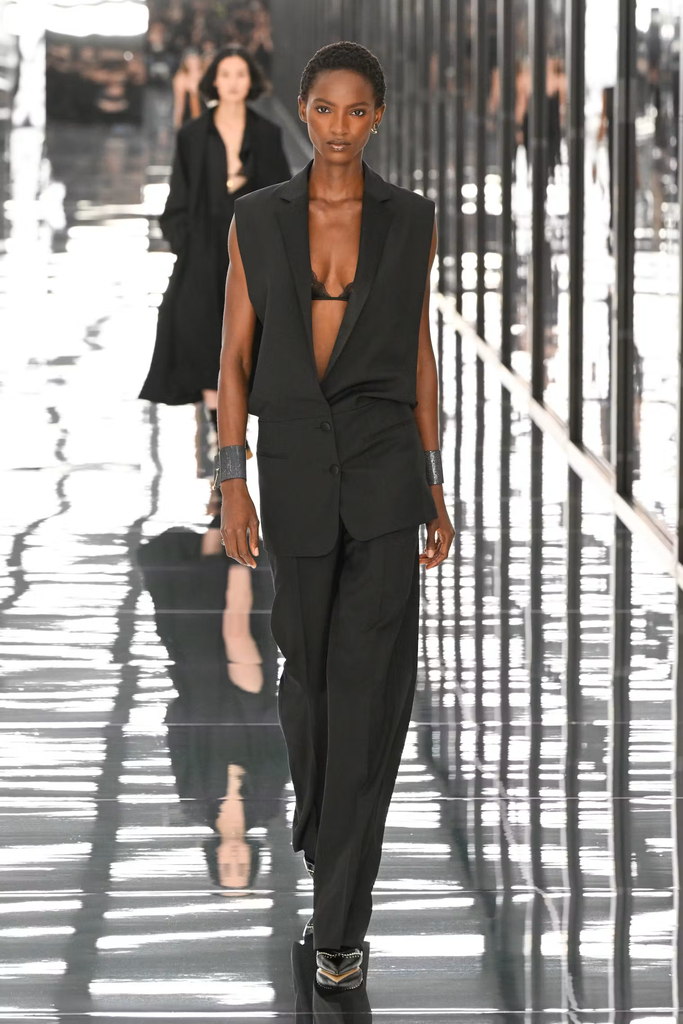
A transparent dress might reveal the silhouette underneath while still creating a layer of distance. A plunging neckline might expose the chest but be balanced by the structure of the rest of the garment. Lingerie might be deliberately displayed while maintaining its connection to intimacy.
The collection therefore plays with boundaries: private and public, covered and uncovered, masculine and feminine.
Fendi’s official show notes emphasized this relationship between the body and clothing, describing contemporary bodies as simultaneously strong and fragile. Chiuri’s designs reflect that contradiction rather than trying to resolve it.
There is strength in the collection’s body-conscious silhouettes, but there is also softness in its delicate fabrics, lace details and flowing transparent layers.
That balance prevents the collection from becoming one-dimensional.
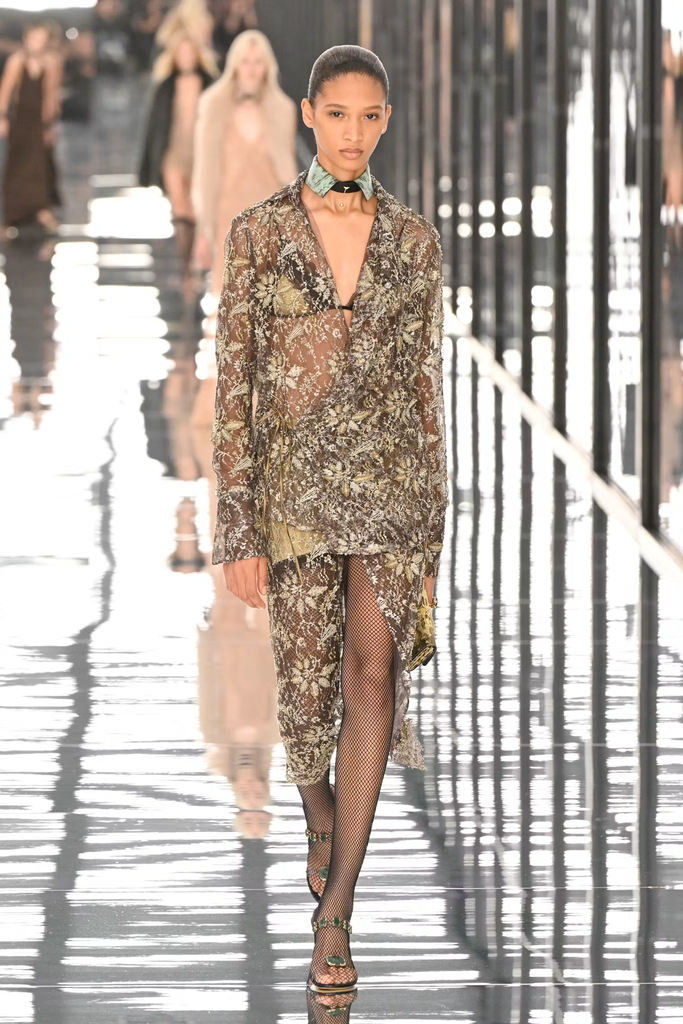
Despite its revealing designs, the collection remains firmly grounded in Fendi’s luxury heritage. Intricate embellishments, carefully chosen fabrics and precise construction give the clothes a sophisticated finish. Even the most provocative looks are presented with the refinement and attention to detail expected from the Italian fashion house.
Carrà’s influence adds another layer of personality.
Her image represents a particularly expressive era of Italian popular culture, when music, television and fashion frequently collided. Her confidence and theatricality make her an ideal reference point for Chiuri, who uses those qualities to explore contemporary ideas about femininity.
Importantly, the designer does not attempt to recreate Carrà’s wardrobe literally.
Instead, she extracts the essential elements of the performer’s style—movement, glamour, confidence and sensuality—and translates them into a modern Fendi vocabulary. The result feels connected to the past without being trapped by it.
The collection moves effortlessly between eveningwear, lingerie, tailoring and body-conscious jersey. Sparkling dresses bring drama, while delicate undergarments introduce intimacy. Sleek black pieces provide structure, while sheer fabrics and flowing silhouettes create movement.
Together, they form a wardrobe designed around the physical experience of wearing clothes.
For Chiuri, the body is not merely something fashion is designed to cover. It is an active part of the design process, influencing how garments move, reveal and interact with the wearer.
That philosophy gives Fendi’s Spring/Summer 2027 collection its central tension. It is glamorous but intimate, revealing but sophisticated, nostalgic but contemporary.
With Raffaella Carrà as her muse, Chiuri has created a collection that celebrates sensuality while considering what it means to feel comfortable, confident and free within one’s own body.
For Spring 2027, Fendi is embracing skin, movement and femininity—and turning the body itself into the season’s most important statement.