The Best Looks From Copenhagen Fashion Week Spring 2027

Copenhagen Fashion Week is celebrating its 20th anniversary with a season that once again highlights the Danish capital’s growing importance on the global fashion circuit. Following an impressive Fall 2026 edition, CPHFW returns for Spring 2027 from August 3 to August 7, with more than 34 shows and presentations bringing together established Scandinavian designers and some of the industry’s emerging voices.
This year’s schedule features Copenhagen favorites Henrik Vibskov, Baum und Pferdgarten, and By Malene Birger, while New York-based label Collina Strada joins the lineup as the season’s International Guest. On August 6, designer Hillary Taymour will bring Collina Strada to the Danish capital for its first Copenhagen Fashion Week presentation.
The program also shines a spotlight on newer labels, including Stem, Taus, and Renè, alongside returning designers such as Anne Sofie Madsen and CPHFW New Talent alum Nicklas Skovgaard.
With shows taking place throughout the city, Spring 2027 is already offering plenty of fashion moments to watch. Here are five collections that capture some of the most distinctive directions emerging from this season’s Copenhagen runways.
Collina Strada
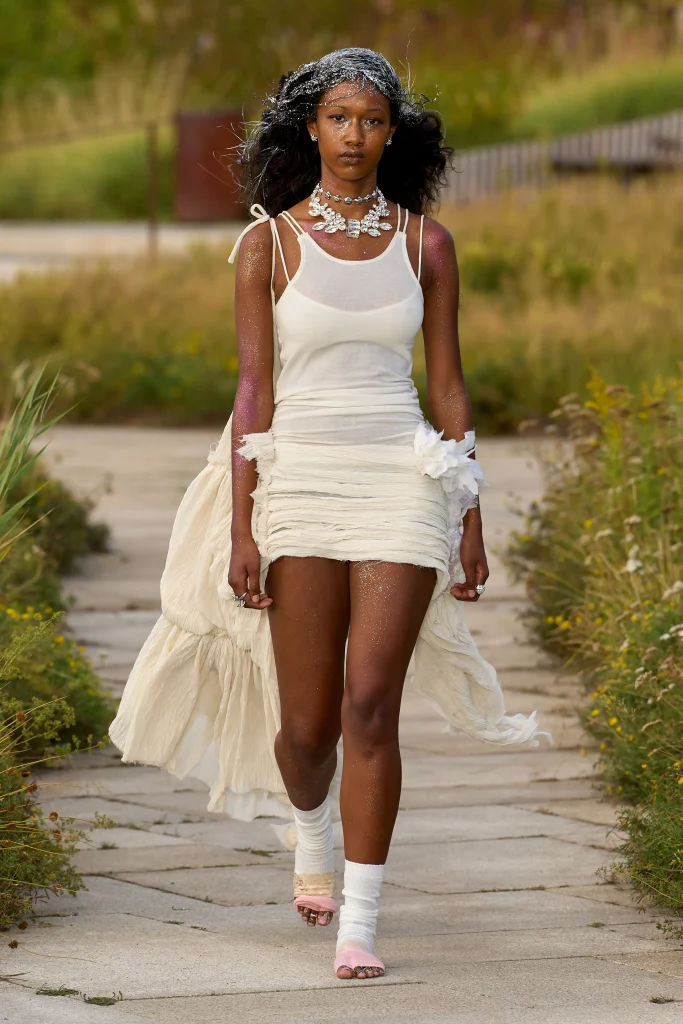
Collina Strada made its Copenhagen debut as the season’s International Guest, presenting its SS27 collection in a theatrical setting featuring violinists and the dramatic atmosphere of the Danish outdoors.
Hillary Taymour’s New York label brought its characteristic mix of humor, experimentation, and romance to the runway. Voluminous ruffles, metallic details, asymmetric cuts, and layers of gathered fabric created silhouettes that felt constantly in motion.
The collection also appeared to explore bridal references, with softer and more romantic elements appearing alongside the label’s unconventional shapes. Elizabethan-inspired makeup and hair added another historical layer, contrasting with the modernity of the clothing.
The strength of the collection came from its contrasts. Romantic details were placed against more disruptive silhouettes, while elegant finishes were paired with unexpected styling choices.
It was an expressive and theatrical introduction to Copenhagen, perfectly reflecting Collina Strada’s ability to challenge conventional ideas of fashion while maintaining a playful sense of identity.
By Malene Birger
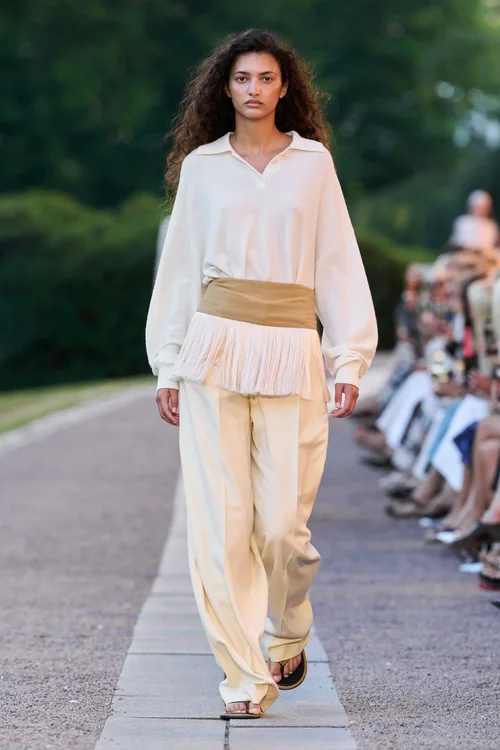
By Malene Birger returned to the runway for Spring 2027 after a six-year break, making its comeback feel particularly intimate by choosing a deeply personal location. Creative director Emilie Martinsen-Kønigsfeld presented the collection in the gardens of her parents’ home outside Copenhagen.
The location directly connected to the collection’s central theme: homecoming. Instead of simply celebrating a return to the runway, the presentation explored the brand’s roots and the ideas that have shaped its identity.
The collection unfolded almost like a visual timeline of a single day. Fresh whites and soft neutrals opened the show before transitioning into warmer golden hues and eventually darker black tones for the evening. Sun motifs appeared throughout the garments, while the soundtrack followed the changing quality of natural light.
The silhouettes maintained the relaxed elegance associated with the house. Easy tailoring, fluid dresses, draped separates, and lightweight coats formed a cohesive wardrobe designed around movement and comfort.
References to the brand’s history appeared in understated ways. A high-neck raincoat with an oversized tassel, scarf-inspired backless tops, and reflective embroidery all nodded to earlier chapters of the house without making the collection feel overly nostalgic.
The 1990s also provided a subtle point of reference. Sheer dresses recalled the effortless glamour of the supermodel era, but their styling remained relaxed and contemporary, giving the looks a distinctly Copenhagen sensibility.
Ultimately, the collection succeeded because it found a natural connection between past and present. By Malene Birger revisited its heritage while translating it into a wardrobe that feels relevant to today’s fashion landscape.
Henrik Vibskov
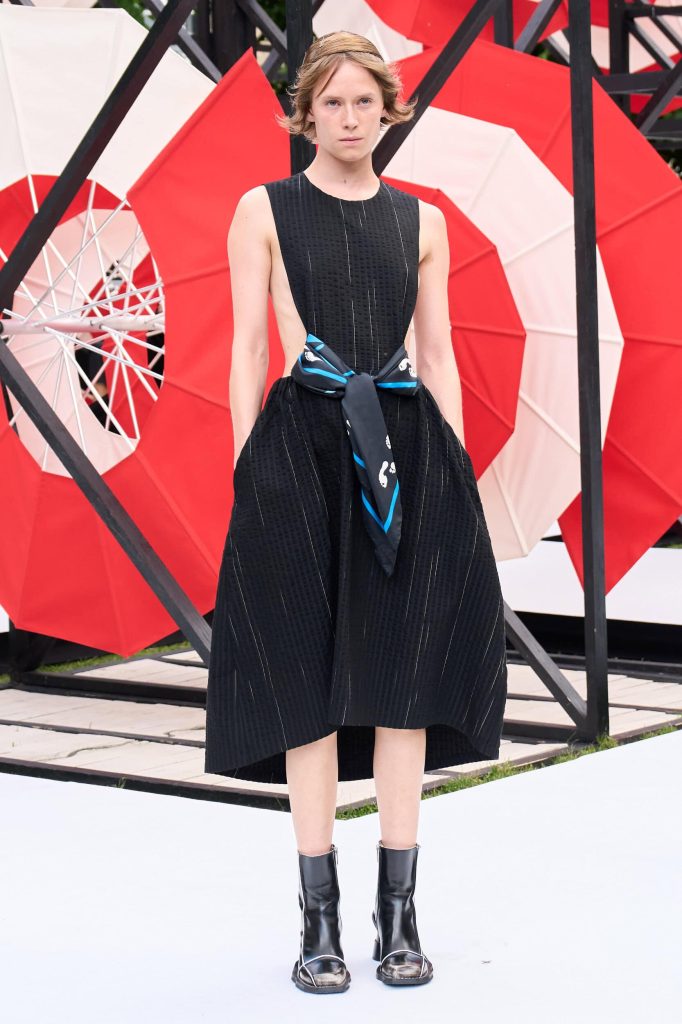
Henrik Vibskov continued his exploration of unconventional fashion for Spring 2027, using the runway as a platform to experiment with proportions, textures, construction, and movement.
Oversized silhouettes were combined with sharper, closer-fitting pieces, creating striking contrasts in volume. Sculptural garments, graphic elements, and unexpected construction techniques gave the collection an artistic quality, while accessories added an additional layer of playfulness.
Despite the conceptual nature of the presentation, the collection maintained a strong sense of practicality. Many of the garments could easily be worn separately, allowing the more dramatic runway styling to be translated into everyday dressing.
That combination of creativity and functionality remains central to Vibskov’s design language. His Spring 2027 collection felt unconventional without becoming inaccessible, demonstrating how experimental fashion can still maintain a connection to real-world wardrobes.
The result was an unmistakable expression of Copenhagen’s creative spirit through the designer’s own highly recognizable perspective.
Baum und Pferdgarten
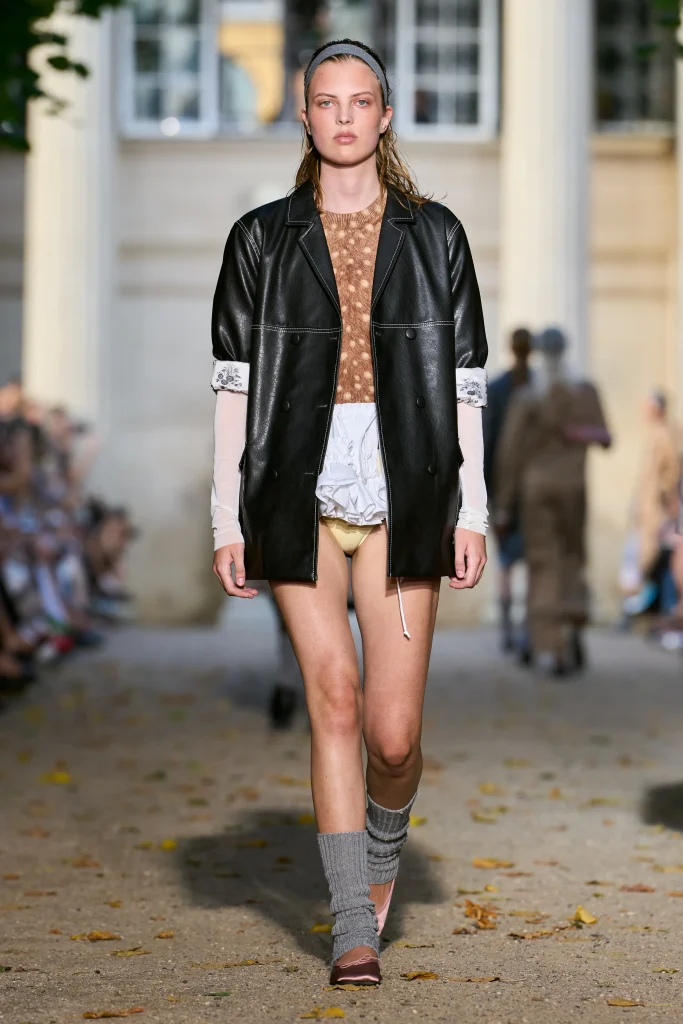
Baum und Pferdgarten approached Spring 2027 with a playful exploration of femininity, combining polished tailoring with relaxed silhouettes and expressive styling.
The collection moved between structured jackets and trousers, softer dresses, flowing fabrics, and more casual separates. Bold prints and contrasting textures brought energy to the looks, while unexpected pairings prevented the collection from feeling too predictable.
Instead of defining femininity through one particular silhouette, the label offered several different interpretations. Tailored looks projected confidence and structure, while fluid pieces created a softer, more relaxed mood.
The collection’s versatility was one of its defining qualities. Many of the garments felt immediately adaptable to life outside the runway, capable of being styled casually or elevated for a more sophisticated setting.
That mix of individuality and practicality remains one of Baum und Pferdgarten’s strongest signatures. For Spring 2027, the label demonstrated once again that playful fashion can be expressive without sacrificing wearability.
Stem
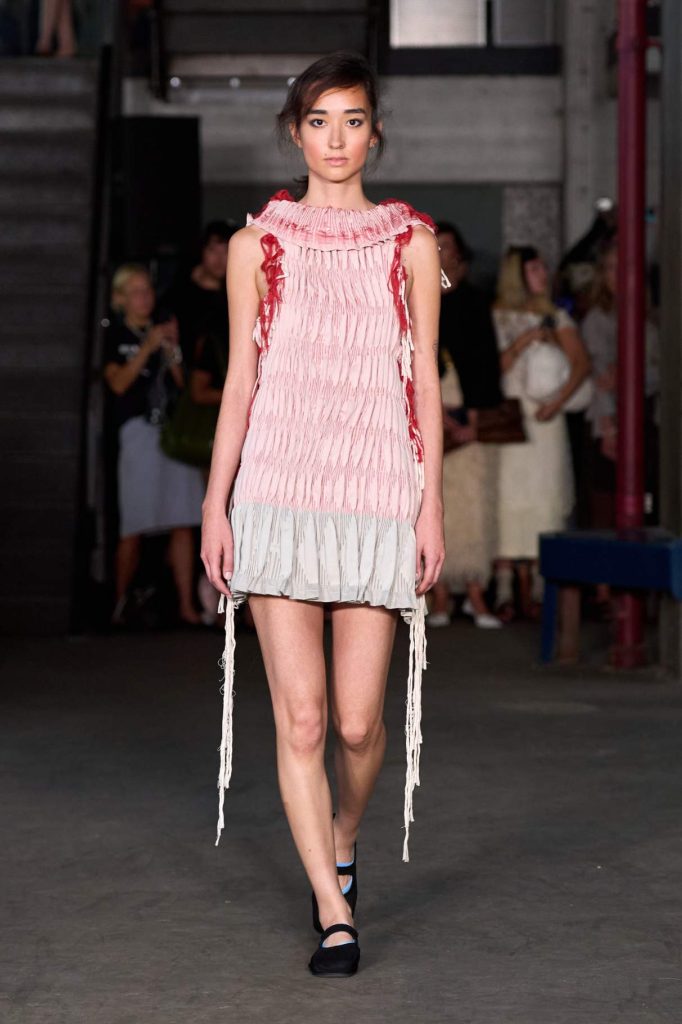
Among the newer labels featured this season, Stem offered one of the more understated interpretations of contemporary Scandinavian fashion. Its Spring 2027 collection focused on precise cuts, fluid forms, subtle finishes, and an emphasis on fabric and construction.
Rather than depending on embellishment, the collection relied on silhouette and material to create visual interest. The result was initially minimal, but closer inspection revealed unexpected proportions and carefully considered styling choices.
This approach reflects the evolution of Scandinavian fashion, particularly among younger designers. Rather than treating Nordic minimalism as a strict set of rules, Stem used simplicity as a base from which to explore new shapes and ideas.
The collection felt youthful but considered, restrained yet quietly experimental. It offered a sense of confidence without relying on obvious statements, suggesting that Stem could become an increasingly notable name within Copenhagen’s emerging fashion scene.