
NYFW Spring 2027 Highlights

New York Fashion Week once again turned the city into a showcase for the future of American fashion, as designers presented their Spring/Summer 2027 collections in some of Manhattan’s most recognizable settings. The season moved across a wide stylistic spectrum, from pared-back minimalism and oversized tailoring to glamorous eveningwear and boundary-pushing designs.
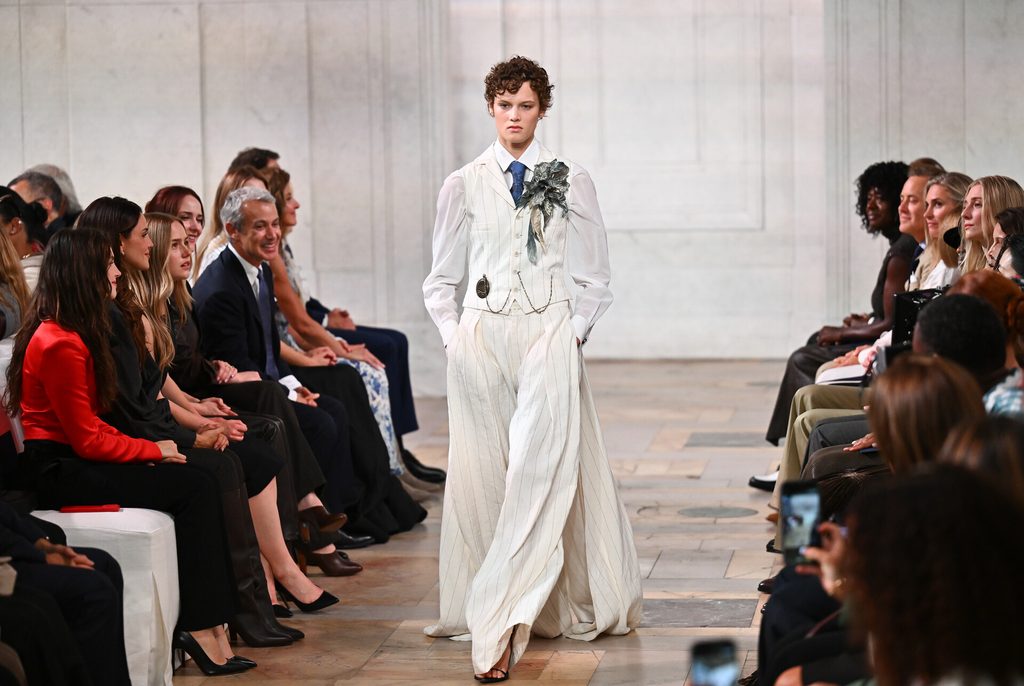
September has always signaled a new beginning on the fashion calendar, offering an early glimpse at the silhouettes and ideas likely to influence the year ahead. This season, designers embraced that sense of reinvention while celebrating New York’s talent for blending contrasts. Traditional sportswear was given luxurious treatments, tailoring became more relaxed, and classic American references were reworked through unexpected fabrics, proportions, and decorative elements.
The opening days brought together both established houses and newer creative voices. Rachel Comey, Cult Gaia, and Coach explored different directions for American sportswear, with Coach marking its 85th anniversary by revisiting elements of its history through a contemporary lens.
Diane von Furstenberg also returned to the official fashion week schedule after years away from the runway. The presentation marked an important new phase for the brand, with Henry Zankov making his debut as creative director.
Across the schedule, Daniella Kallmeyer, Anna Sui, Kate Barton, Sandy Liang, and Rachel Scott of Proenza Schouler offered varied interpretations of femininity. Their collections ranged from romantic and playful to sophisticated and sharply tailored.
New York’s affinity for glamour was equally evident. Carolina Herrera, Thom Browne, Jonathan Simkhai, and Michael Kors presented elegant approaches to evening dressing, while designers such as Terrence Zhou, Jane Wade, Christian Juul Nielsen, and Lorena Pipenco challenged conventional ideas of proportion and construction with sculptural shapes and unconventional materials.
That mixture of perspectives is central to the appeal of New York Fashion Week. The city has always provided room for established traditions and radical experimentation to exist within the same fashion conversation.
For Spring/Summer 2027, the message was particularly clear: American fashion is not defined by a single look. It can be polished or relaxed, nostalgic or futuristic, understated or unapologetically dramatic.
Among the collections that captured that range particularly well were Ralph Lauren, Tommy Hilfiger, Tory Burch, and Calvin Klein.
Ralph Lauren
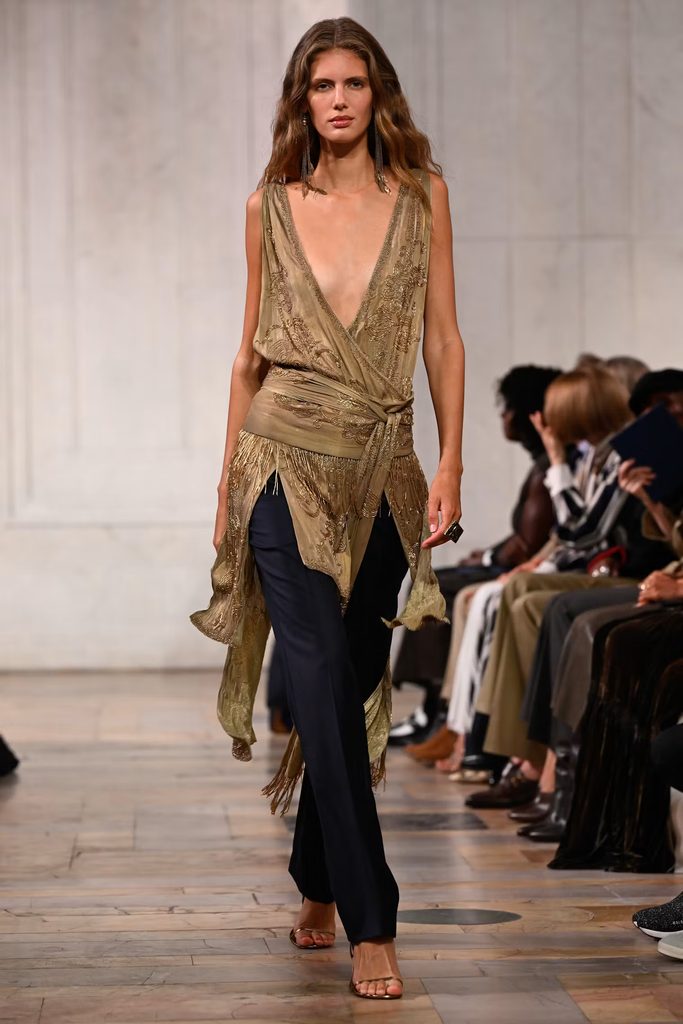
Ralph Lauren continued his exploration of the relationship between rugged Americana and sophisticated glamour with a collection that felt both familiar and extravagant.
The designer framed the season around an “irreverent take on romance,” focusing on individuality, confidence, and personal style. Tailored trousers and structured outerwear established a classic foundation, while elaborate embellishment brought a more theatrical dimension to the collection.
Flapper-inspired tops were covered in beads and fringe, while flowing silk skirts shimmered with a rich golden finish. Denim received an elevated treatment through intricate jacquard patterns, while fur stoles added an unmistakable dose of vintage glamour.
Despite these dramatic details, the collection never abandoned Lauren’s characteristic ease. The clothes retained a sense of casual confidence, allowing even the most elaborate pieces to feel surprisingly wearable.
The result was quintessential Ralph Lauren: American, luxurious, romantic, and effortlessly recognizable.
Tommy Hilfiger
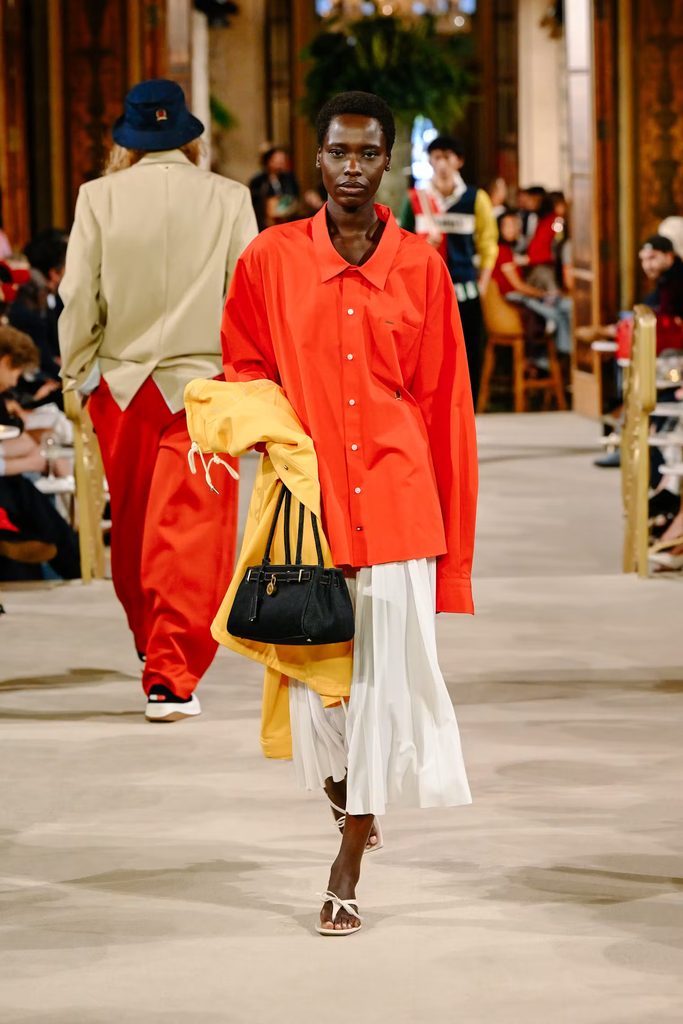
Tommy Hilfiger made a memorable return to the New York runway calendar with a presentation at The Plaza Hotel.
The historic location provided an ideal backdrop for his modern take on American prep. Familiar staples such as blazers, trousers, and tailored separates were deliberately oversized, creating an easy, borrowed-from-the-boys silhouette.
Sporty colors and relaxed styling kept the looks youthful, while fitted knit dresses offered a more sensual interpretation of rugby-inspired dressing.
The collection succeeded by finding a balance between nostalgia and modernity. Rather than simply recreating classic prep, Hilfiger loosened its proportions and introduced a more contemporary attitude.
It was a collection that felt youthful, confident, and unmistakably connected to New York.
Tory Burch
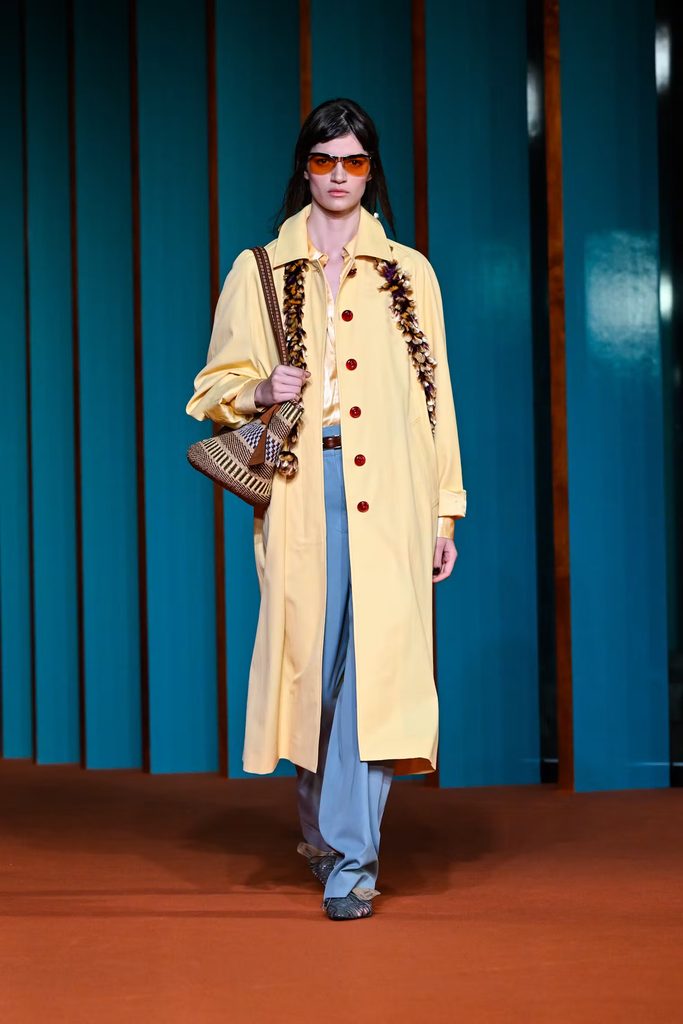
Tory Burch brought an optimistic energy to the Spring/Summer 2027 runway, combining functional wardrobe pieces with elaborate decorative details.
Cardigans appeared with coral-inspired embellishment, structured silhouettes were finished with statement chains, and jewel-toned looks were enriched with floral and garland-like accents.
The collection approached femininity with a playful attitude. Instead of treating luxury as something overly formal or restrained, Burch embraced color, texture, ornamentation, and even a sense of humor.
That combination made the clothes feel expressive without sacrificing practicality. Everyday pieces were transformed through unexpected details, giving them a distinctly fashion-forward character.
Ultimately, Burch presented dressing as an opportunity for pleasure and self-expression. Her collection suggested that even the most functional wardrobe can leave room for fantasy.
Calvin Klein
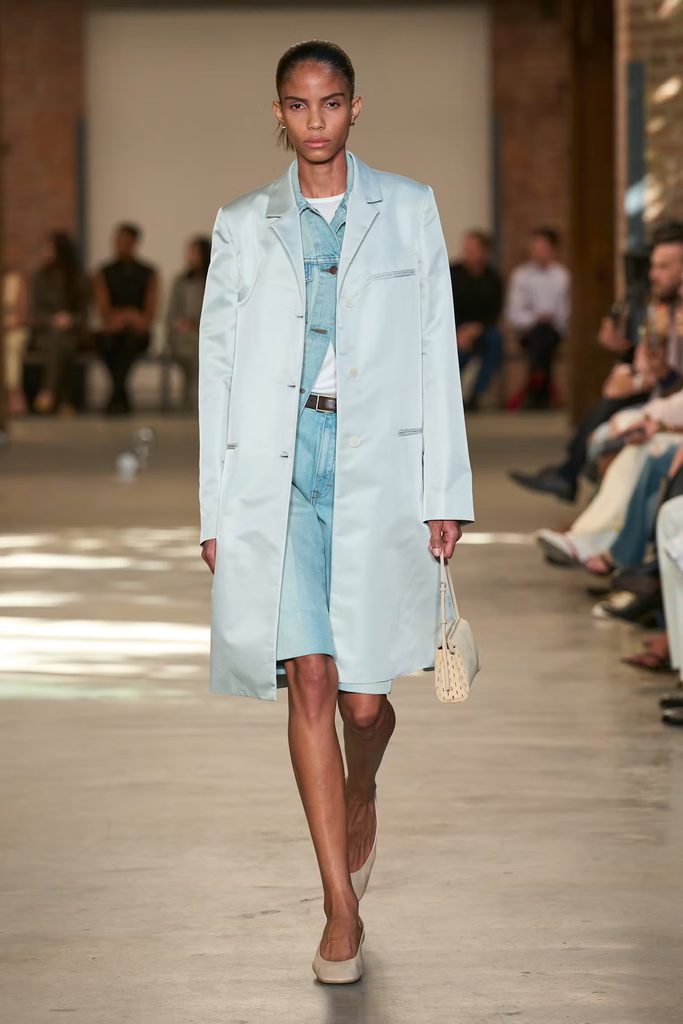
Veronica Leoni offered a sharply contrasting vision at Calvin Klein, returning to the house’s minimalist heritage for Spring/Summer 2027.
The collection evoked the understated sophistication of the 1990s, with clean lines and precise silhouettes recalling the effortless style associated with Carolyn Bessette-Kennedy.
Rather than relying on embellishment, Leoni concentrated on shape, proportion, and construction. The designs were deliberately stripped back, allowing the quality of the silhouettes to become the main focus.
In a season filled with ornate details and dramatic proportions, Calvin Klein’s restraint felt especially distinctive. The collection demonstrated that simplicity can have an impact of its own when every element is carefully considered.
Together, these four collections offered a snapshot of the many directions American fashion is taking for Spring 2027. Ralph Lauren leaned into romantic Americana, Tommy Hilfiger modernized prep, Tory Burch celebrated expressive femininity, and Calvin Klein embraced polished minimalism.
Their differences ultimately tell the larger story of New York Fashion Week. The city does not insist on one particular definition of fashion. Instead, it allows heritage and innovation, practicality and glamour, restraint and excess to share the same runway.
For Spring/Summer 2027, that freedom remains one of New York’s most compelling qualities.